Exhibit A — Conformance Audit
§ 3.1 — Prioritized findings
Documentation § Exhibit A
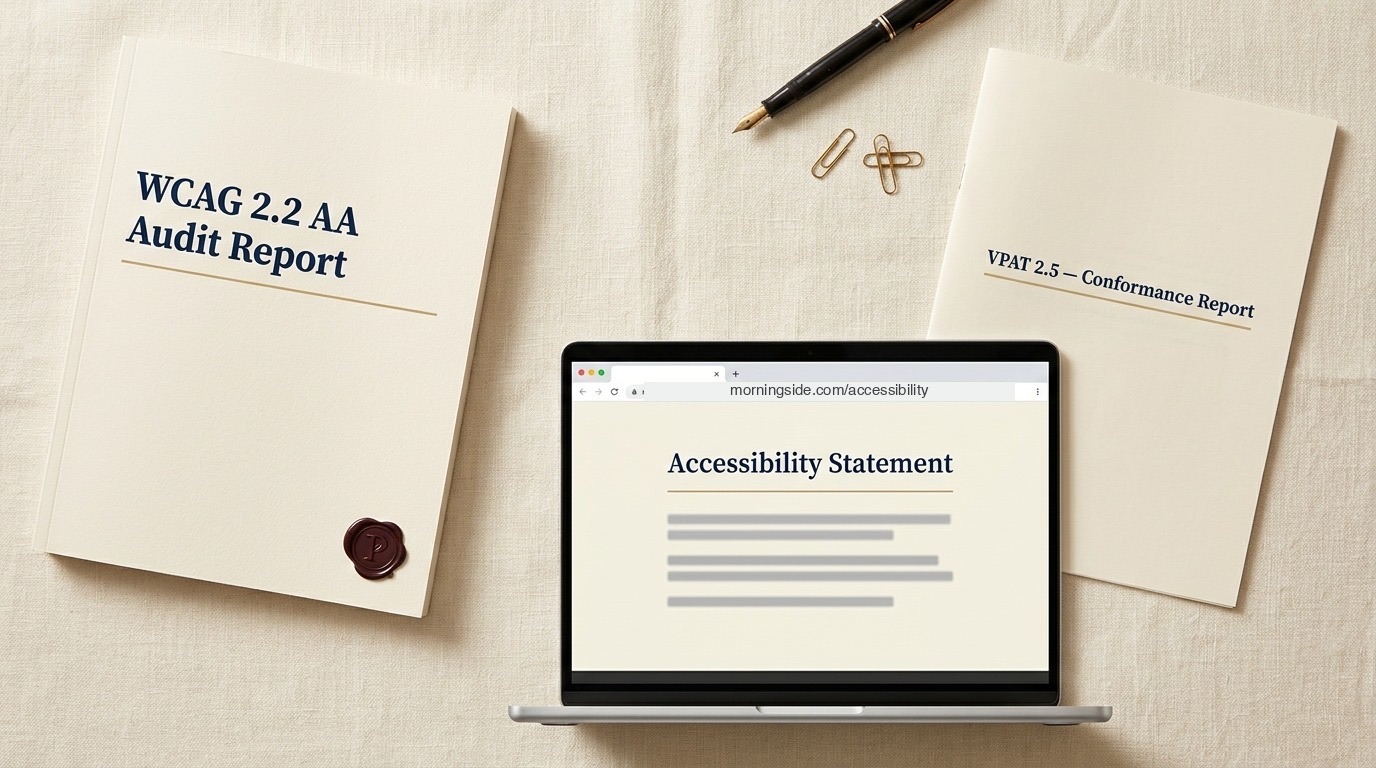
Paperfort produces the three artifacts Shopify merchants hand to procurement, defense counsel, and the ATG’s office: a paginated WCAG 2.2 AA audit PDF, a hosted /accessibility statement, and a VPAT 2.5 conformance report. We don’t touch your storefront. No overlay. No contrast slider. No one-click magic.
Not a dashboard. Not a score. Not a widget. Three deliverables, versioned, dated, and exportable — the same paper trail a Fortune-500 legal team would expect from a standards firm.
A paginated WCAG 2.2 AA conformance report. Every success criterion, every finding, every template — with severity, code-level reference, and a prioritized remediation plan your developer can ticket on Monday.
A hosted /accessibility page on your own domain — the URL plaintiff’s counsel looks for first. Versioned, dated, with a real feedback channel and the scope of your most recent audit.
| Criterion | Level | Status |
|---|---|---|
| 1.1.1 | A | Supports |
| 1.4.3 | AA | Partial |
| 2.1.2 | A | Remediating |
| 4.1.2 | A | Supports |
The conformance report procurement asks for before renewing. ITI-format VPAT 2.5 — the rev enterprise and government buyers require, not the consumer-facing one. One PDF, boilerplate-free, filled in from your actual audit data.
If you’ve shopped this category, you’ve seen the widget — the little wheelchair icon in the corner, the toolbar with contrast sliders and text-size buttons. That category is what we make documents about. It’s not what we sell.
The FTC’s accessiBe settlement didn’t just fine one company. It changed what plaintiff’s counsel looks for in discovery.
On January 3, 2025, the Federal Trade Commission ordered accessiBe — the largest vendor in the accessibility-overlay category — to pay $1 million for deceiving consumers with claims that its AI widget made websites “ADA compliant.”
The settlement did two things at once. First, it made every “AI-powered compliance” claim in the category legally radioactive — the exact copy on every overlay landing page became a liability, not a marketing asset.
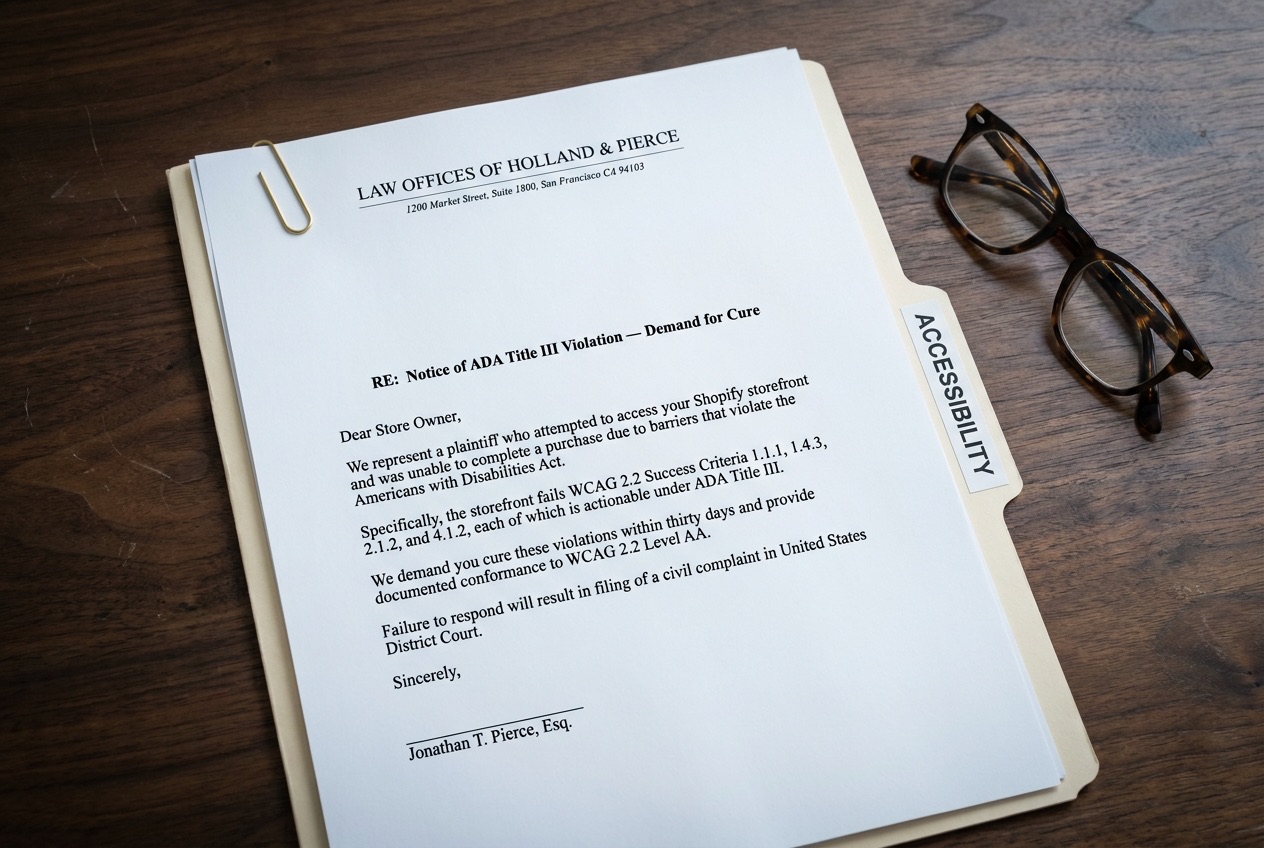
Second, and more consequential for merchants: plaintiff’s firms pivoted. A widget on your homepage used to be neutral. Today, it is routinely cited in demand letters as evidence the merchant knew about accessibility obligations and chose a shortcut — the opposite of the defensive posture it was sold as.
What plaintiff’s counsel does not cite as negative evidence: a dated, paginated audit report; a versioned statement page; a VPAT on file. Because those are the artifacts of the actual work.
That’s the category Paperfort is in. We produce the paper trail. You do the remediation. Your developers ticket the findings. And when the letter arrives — and in this category, at some point, it does — you respond with documents, not with a screenshot of a widget.
Four tiers. Published prices. The one-time bundle is for merchants with a demand letter in hand; the subscriptions are for merchants who would rather have the documents ready before the letter arrives.
One storefront. The three documents, refreshed quarterly. For solo merchants who want the paper trail on file.
One storefront, monthly refresh. Priority review when you ship a theme change. For stores over $1M GMV.
Up to 10 client storefronts. White-label cover pages. Procurement-ready VPATs for enterprise deals.
You received a demand letter this week. You need the three documents dated, signed, and filed in seven days. This is that.
A real person at each. Replies within one business day, or same-day for demand-letter bundles.
Install help, audit questions, refresh cadence, anything about your store’s three documents.
Bulk deployment across client portfolios, white-label VPATs, procurement-cycle timelines.
Data-subject requests, sub-processor disclosures, DPAs for EU and California buyers.